From 1-Year Unattended Deaths to Rural Hoarding: The 2026 Filthy Masters Protocol
- Last Updated, February 11, 2026
- Chris Rozenberg
Table of Contents
Introduction
When a traumatic event occurs, the immediate shock often obscures the long-term necessity of professional intervention. Biohazard remediation Calgary is a specialized field that goes far beyond standard cleaning; it is a clinical process designed to return a contaminated environment to a state of safety and habitability. Whether you are dealing with a workplace accident, a crime scene, or a sudden loss, the biological risks involved—ranging from bloodborne pathogens to environmental toxins—require a level of expertise that traditional janitorial services cannot provide. At Filthy Masters, we operate on the front lines of property recovery, ensuring that every microscopic threat is neutralized with precision and discretion.
The thesis of this guide is that professional trauma recovery in Calgary must be an intersection of three critical pillars: strict regulatory compliance, advanced biological science, and unwavering empathy. By understanding the technical requirements and the local resources available, Calgary residents can navigate these difficult moments with the confidence that their property—and their health—is in the hands of masters.
Section 1: The Biohazard Spectrum
From Bloodborne Pathogens to Fentanyl
In the remediation industry, we categorize biohazards based on their “Risk Group” (RG). In Calgary, the scope of a trauma scene can vary from a low-risk accidental injury to high-risk environments involving synthetic opioids or infectious diseases. Understanding this spectrum is the first step in biohazard remediation Calgary professionals take to ensure a site is truly safe.
The Bloodborne Pathogen Threat
While blood is the most common biohazard we encounter, it is also one of the most dangerous. Pathogens like Hepatitis B, Hepatitis C, and HIV are remarkably resilient. In the specific climate of Southern Alberta—characterized by high altitude and low humidity—biological fluids can dry quickly on the surface while remaining “trapped” and viable in the porous sub-layers of flooring or drywall.
- Hep B Persistence: The Hepatitis B virus can survive in dried blood on surfaces for up to seven days and still be capable of causing infection.
- The “Wick” Effect: When blood hits a Calgary home’s carpet, it doesn’t just sit on the fibers. It wicks into the padding and the plywood subfloor. Standard cleaning only addresses the “tip of the iceberg,” leaving a biological reservoir that can lead to mold growth and persistent odors.
The Surge of Synthetic Opioids (Fentanyl & Carfentanil)
One of the most critical shifts in Calgary’s trauma recovery landscape over the last few years has been the prevalence of synthetic opioids. Fentanyl is 50 to 100 times more potent than morphine, and carfentanil is 10,000 times more potent. At Filthy Masters, we treat any scene with suspected drug activity as a high-risk chemical hazard. A single grain of airborne fentanyl powder—smaller than a grain of salt—can be fatal if inhaled or absorbed through the skin. Our protocol for these sites involves:
- Chemical Neutralization: Using specialized oxidizing agents that break down the molecular structure of the drug.
- Advanced Respiratory Protection: Technicians must wear P100-rated full-face respirators, as standard N95 masks are insufficient against microscopic drug particulates.
Decomposition and Airborne Bio-Aerosols
In cases of unattended death, the primary hazard isn’t just the visible fluid; it’s the bio-aerosols. As bacteria break down organic matter, they release gases and microscopic droplets into the air. In a closed Calgary apartment, these particles settle into the HVAC system and on every horizontal surface in the property. This is why “cleaning the spot” is never enough; the entire volume of air in the home must be treated to prevent respiratory risks for future occupants.
Section 2: The Data of Recovery
Trauma Trends in Calgary (2026)
In 2026, the demand for specialized unattended death cleanup Calgary services has seen a marked increase, reflecting broader demographic and social shifts in the Calgary Metropolitan Region. According to recent municipal health data, unattended deaths (instances where a person passes away alone and is not discovered for days or weeks) now account for nearly 35% of all non-hospital-related biohazard calls in the city. This trend is largely driven by Calgary’s aging population and the rise of single-occupant households in high-density areas like the Beltline and Downtown West End.
The biological data associated with these scenes is sobering. Within 24 to 48 hours of death, a body begins the process of decomposition, releasing airborne bacteria and volatile organic compounds (VOCs). In the dry, high-altitude climate of Calgary, these fluids can permeate subflooring and drywall much faster than in more humid environments, often requiring the removal of structural materials that have been saturated.
Statistically, properties remediated by certified experts like Filthy Masters see a 99.9% reduction in pathogen load, whereas “do-it-yourself” attempts or standard cleaning often leave behind microscopic traces of Hepatitis B, C, or HIV, which can survive on surfaces for weeks. Furthermore, Alberta Occupational Health and Safety (OHS) reports indicate that improper handling of biohazardous waste can lead to fines exceeding $10,000 for property owners, underscoring the legal necessity of professional recovery. Alberta OHS Act, Regulation, and Code.
Section 3: The Filthy Masters Protocol
Biological Decontamination at the Microscopic Level
At Filthy Masters, we often tell our clients: “If you can see it, it’s a cleaning job. If you can’t see it, it’s a remediation job.” True biological decontamination happens at the microscopic level. We follow a strict, six-stage scientific protocol to ensure a property is returned to a “Clearance” state.
1. The Triple-Zone Containment System
To prevent cross-contamination, we establish three distinct work zones:
- The Hot Zone: The immediate area of contamination where technicians wear full PPE.
- The Warm Zone (Decon): A transition area where technicians are “de-gowned” and equipment is sanitized before leaving the site.
- The Cold Zone: The “clean” part of the property where our command center and unaffected supplies are kept.
By maintaining negative air pressure using HEPA-filtered air scrubbers, we ensure that no airborne pathogens or odor molecules can escape the Hot Zone and enter the rest of the building. We usually dig our way in and make a clean area first for our equipment, supplies, and a place to rest.
2. Molecular Odor Neutralization (Hydroxyl vs. Ozone)
In Calgary’s dry air, odors from trauma or biohazards can be particularly “sticky.” While many companies use Ozone generators, Filthy Masters prefers Hydroxyl Generation.
- Hydroxyls occur naturally in the atmosphere and are the most powerful oxidizing agents known to science.
- Unlike Ozone, Hydroxyls are safe for use around sensitive electronics, rubber, and plastics.
- They work by dismantling the carbon-to-carbon bonds of odor molecules (like those found in decomposition or pet waste), effectively “killing” the smell at its source rather than just masking it with perfumes.
3. ATP Surface Verification: The Science of “Clean”
How do we prove a room is safe? We don’t guess; we test. We use ATP (Adenosine Triphosphate) Monitoring. ATP is a molecule found in all living cells (bacteria, mold, human tissue).
- Our technicians swab the remediated surfaces and place the sample into a luminometer.
- A reading of under 10 RLU (Relative Light Units) is our “Master” standard for a sanitized surface.
- If a surface reads higher, we re-clean and re-test until it passes. This data is included in our final report, providing property owners with a scientific “Certificate of Sanitization” that is legally defensible.
4. Grid-Based Bio-Waste Management
In accordance with Alberta’s Environmental Protection and Enhancement Act, all bio-medical waste must be handled with a strict chain of custody. We utilize a “Grid-Sorting” method to identify items that are:
- Porous/Unsalvageable: Items like mattresses, sofas, or carpet that have absorbed biological fluids must be double-bagged in 6-mil red biohazard bags and incinerated at a licensed Calgary facility.
- Non-Porous/Salvageable: Metal, glass, and some hard plastics can be decontaminated using broad-spectrum, hospital-grade disinfectants.
- Sentimental/Valuable: We use specialized enzymatic cleaners to attempt recovery of high-value items (like jewelry or photographs) that were in the vicinity but not directly saturated.
Section 4: The Science of Neutralization
Why Chlorine Dioxide (ClO2) is the Condominium Gold Standard
In the dense urban landscape of Calgary—from the high-rises of the East Village to the garden apartments of Beltline—remediating odors in shared spaces presents a unique engineering challenge. Traditionally, the industry relied heavily on Ozone ($O_3$) as the primary tool for air scrubbing. However, at Filthy Masters, we have pioneered a safer, more surgical approach using Chlorine Dioxide (ClO2) gas, particularly for condo-style apartments and shared residences.
The Safety Advantage in Shared Spaces
Ozone is a powerful oxidizer, but it is “untargeted.” It can easily penetrate HVAC vents and travel between units in older Calgary buildings, forcing neighbors to evacuate for hours or even days. Chlorine Dioxide (ClO2), while also an oxidizer, allows for much tighter control.
When we work in a condo or a home where other occupants remain in the building, our protocol involves:
- Physical Sealing: We use 6-mil poly-sheeting and tension poles to create an airtight seal around the impacted unit or room.
- Targeted Gas-Off: ClO2 is deployed within the sealed “Hot Zone.”
- Molecular Penetration: Unlike liquid sprays that only treat surfaces, (ClO2) gas moves like air. It penetrates porous drywall, the back of cabinetry, and deep into floor joists where “death odors” (cadaverine and putrescine) like to hide.
This approach allows us to maintain a safe environment for neighbors and family members in the next room while performing a total “odor-kill” within the affected space.
Case Study: Remediating a One-Year Unattended Death
To understand the difference between “cleaning” and “mastery,” one must look at the most extreme cases. Recently, Filthy Masters was called to a Calgary condo for a remediation involving an unattended death that had remained undiscovered for one full year.
The Challenge: A Year of Saturation
A year-long discovery means that the biological processes of decomposition have moved through every stage, and the resulting gases have had 365 days to saturate every cubic inch of the property. In these scenarios, the smell is not just “in the air”—it has become part of the building’s molecular structure.
The Filthy Masters “Total Kill” Protocol
For this high-stakes project, we deployed a multi-stage neutralization strategy:
- The ClO2 Power-Cycle: We performed three separate Chlorine Dioxide treatments, utilizing a nearly unprecedented 1,000 grams (1lb) of product. This high-concentration gas-off was necessary to break down the sheer volume of organic odor molecules embedded in the concrete and structural framing.
- The Hybrid Approach: To ensure 100% saturation in the hardest-to-reach crevices, we supplemented the ClO2 with two Ozone treatments once the unit was fully sealed and neighbors were notified. This “double-punch” of oxidation ensures that no biological signature remains.
- The Final Encapsulation: After the gas treatments, we finished the unit with a localized application of Odorcide. Unlike typical deodorants, Odorcide is a professional-grade counteractant that bonds with odor molecules and changes their structure so they are no longer detectable by the human nose.
By the end of this protocol, a property that had been biologically compromised for a year was returned to a neutral, safe, and marketable state.
Section 5: Gross Filth & Fecal Remediation
Managing Copious Contamination
There is a line between “messy” and “Gross Filth.” This category involves copious amounts of human or animal waste.
Animal & Zoonotic Threats
Beyond the “ick factor,” animal waste carries specific regional risks. In Alberta, Hantavirus (carried by deer mice) is a primary concern. The virus is spread when rodent urine or droppings are disturbed and inhaled as dust. With a mortality rate that can reach 30-40%, this is a hazard that Filthy Masters never takes lightly.
The Filthy Masters “Scrape and Sanitize” Protocol
When we encounter “copious” amounts of droppings—where the floor or subfloor is literally obscured by waste—we don’t just start shoveling. That is how pathogens become airborne. Our protocol for extreme fecal contamination follows a strict sequence:
- Aerosol Suppression (The Wet Method): We never handle dry droppings. We use a proprietary wetting agent or a 10% bleach-equivalent hospital disinfectant to saturate the waste. This “locks” the pathogens and dust in place, preventing them from entering the air column during removal.
- Bulk Removal and Scraping: Once the material is inert, our technicians (in Level C PPE with P100 respirators) perform bulk removal. This often involves scraping down to the substrate. If fecal matter has saturated porous materials like OSB or plywood, we perform controlled demolition to remove the “host” material entirely.
- HEPA Air Scrubbing: During the entire process, we run industrial air scrubbers with HEPA filtration.
- Enzymatic Digestion: After the bulk waste is gone, we apply enzymatic digesters (like Odorcide or Deozyme) that literally eat the remaining organic proteins.
Case Study: The Abandoned Suite (Level 5 Human Biohazard)
One of the most sobering examples of the “Gross Filth” phenomenon involves a recent call from a local Calgary landlord in Forest Lawn. The situation began as a “midnight move.” A Tenat disappeared When the landlord’s brother entered the suite, he was met with a scene that even veteran property managers find difficult to describe.
The Discovery: Level 5 Human Contamination
Every single surface of the suite—the bedding, the kitchen counters, the living room walls, and even the bathroom fixtures—was covered in human fecal matter. This wasn’t a case of a single accident; it was a long-term accumulation. In the remediation world, this is a Category 3 Biohazard event. Human feces can harbor pathogens including C. diff, Hepatitis A, and parasitic organisms like Giardia.
The Fridge Factor: Black Mold and Organic Rot
As we moved into the kitchen, we discovered a secondary threat. The refrigerator, abandoned with organic matter inside, had become a localized ecosystem for Stachybotrys chartarum (Black Mold). Opening the door without a P100 respirator can lead to immediate respiratory irritation or long-term fungal infection. For this landlord, the fridge was no longer an appliance; it was a pressurized bio-weapon.
The Filthy Masters Two-Visit Restoration Protocol
A site of this magnitude cannot be cleared in a single day.
- Visit 1 (Bulk Extraction and Bio-Knockdown): Our primary goal was to remove the “mass” of the contamination using industrial scrapers and HEPA vacuums. All bedding and porous kitchen items were double-bagged and incinerated. We then performed an initial “knockdown” using a high-concentration broad-spectrum disinfectant.
- Visit 2 (Deep Decontamination): Once the bulk filth was gone, we returned for the “Mastery” phase. This involved a full structural scrub of the walls and the application of ClO2 gas to reach into the wall cavities. We also oversaw the removal of the refrigerator as a sealed unit to prevent the spread of black mold spores.
The Lesson for Landlords: This case illustrates the danger of “familial assessment.” The landlord’s brother was exposed to airborne pathogens without PPE. We recommend that the moment a landlord suspects “Gross Filth,” they seal the door and call the professionals.
Section 6: Avian Biohazards (Pigeon Guano)
The 290kg SE Calgary Patio Recovery
In the urban landscape of Calgary, particularly in high-density areas like the Southeast, balconies and patios often become “sanctuary zones” for pigeons. While a few birds might seem harmless, their waste is a concentrated biohazard. Pigeon droppings (guano) are known carriers of Histoplasmosis, Cryptococcosis, and Psittacosis. The guano is also highly acidic and can dissolve building materials, leading to secondary structural damage.
Case Study: The SE Calgary “Top-Floor” Balcony Crisis
We recently remediated a top-floor patio in a SE Calgary condominium that had become completely saturated with pigeon waste. This wasn’t just a surface-level mess; it was a structural and biological emergency. The total weight of the waste, combined with the contaminated patio furniture, clocked in at a staggering 290 kg (approx. 640 lbs).
The Logistics of Zero-Contamination
The primary challenge of a top-floor condo remediation is the “Path of Travel.” You cannot simply drag 290 kg of bird feces through a clean unit or down a common hallway without risking a building-wide health violation.
The Filthy Masters Protocol for this project included:
- Direct-Wrap Containment: Every single piece of contaminated furniture and every bag of shoveled waste was double-wrapped and sealed on the balcony. This ensured that no dust or fecal matter could escape during the transition through the unit and the condo’s elevators.
- Bulk Shoveling and Extraction: Using non-sparking tools and HEPA-filtered vacuum systems, our team removed the bulk waste while maintaining strict PPE standards.
- The Dual-Rinse Sanitization:
- Phase 1 (Enzymatic): We performed an initial rinse using a high-concentrate enzyme cleaner to break down the “bio-film.”
- Phase 2 (Botanical Antimicrobial): We finished the site with a final rinse of Decon 30, a specialized botanical antimicrobial that kills 99.9% of bacteria and viruses without leaving harsh chemical residues.
Case Study: The Edmonton “Service Gap” (High-Angle Solar Recovery)
Location: Edmonton, Alberta Client: Major Home Builder (Show Home)
While our base is in Calgary, specialized mastery often requires us to travel. We were recently contacted by a prominent home builder in Edmonton who was facing a crisis with a luxury show home. They had been referred to us by a pest control partner after every local option turned them down.
The “Impossible” Intersection The home featured an extensive solar panel array which had become a nesting ground for pigeons. The result was 90 kg (approx. 200 lbs) of toxic guano clogging the second-story gutters. The builder couldn’t find a solution because of a specific industry gap:
- Gutter Cleaners: Refused the job because they lacked the PPE and training to handle Histoplasmosis and hazardous waste.
- Biohazard Companies: Refused the job because they lacked the fall-arrest training and insurance to work at heights.
The Filthy Masters Solution We traveled to Edmonton to bridge that gap.
- High-Angle Execution: Utilizing full fall-protection gear, our team accessed the roofline safely.
- Solar Panel Extraction: We manually removed and bagged the 90kg of compacted waste from beneath the solar arrays and gutters, ensuring no “spillover” contaminated the show home’s landscaping or driveway below.
- Timeline: In just 6 hours onsite, we resolved a biological liability that had been stalling the builder’s sales team for weeks.
Section 7: Addiction & Intervention Cleanups
Restoring Dignity in Airdrie Meadows
Biohazard recovery is often the first step in a fresh start for those battling addiction.
Case Study: The Airdrie Meadows Reset
We were contacted by a former employer of a homeowner in Airdrie Meadows. Alcohol dependency had led to a home filled with biohazards (dog fecal matter & urine on hardwood) and massive clutter.
- The 1,400 Can Return: We cleared over 1,400 beer cans from the property.
- The Integrity Check: In the remediation industry, it’s easy to throw everything in a dumpster. At Filthy Masters, we don’t work that way. We sorted, bagged, and returned the cans to the depot. We then handed the cash return directly back to the homeowner. It was a small amount of money, but a huge gesture of respect—proving that we were there to help him reset his life, not just throw it away.
Section 8: Beyond City Limits
Serving Wheatland, Vulcan, and Rural Alberta
Trauma doesn’t respect municipal boundaries. Filthy Masters is equipped for the unique challenges of rural recovery.
Case Study: The Strathmore “Deep Reset”
Location: 15 Minutes East of Strathmore (Wheatland County)
We tackled a property that had overwhelmed normal cleaners. The home was infested with boxelder beetles and flies feeding on hidden food sources.
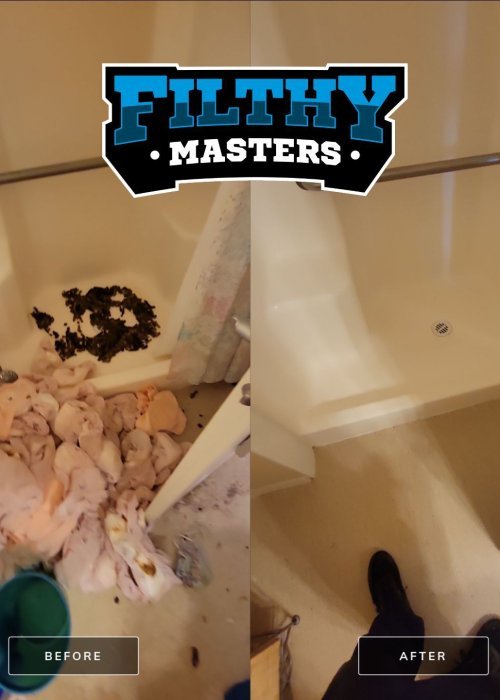
- Restoration vs. Replacement: The master bathroom shower was coated in years of lime-rust scale. Instead of a costly demolition, we sanitized the substrate and applied marine-grade epoxy paint, saving the homeowner thousands in renovation costs by knowing the difference between “cleaning” and “restoring.”
Case Study: The Mossleigh Tragedy
Location: Near Mossleigh (Vulcan County)
We remediated an unattended death in a converted chicken coop. The occupant was a severe recluse, and the space was tight, filled with hundreds of urine bottles and animal remains.
- The Safety Factor: The family could not physically enter without respirators. We entered the “Hot Zone” to retrieve and sanitize legal documents, and items they were seeking. Allowing the estate to be settled without the family witnessing the conditions inside.
Please Share our Filthy Masters guide using the links below.
Facebook
Twitter
LinkedIn
Pinterest
Reddit
WhatsApp
Tumblr
Telegram
Section 9: Counting the Cost
Insurance and Pricing in 2026
“How much does it cost?” is the most common question we receive. In 2026, crime scene cleaners in Calgary cost between $2,500 and $15,000, depending on several critical variables.
- Structural Permeation: If blood has reached the subfloor or seeped behind baseboards, underlay and carpets may be removed the cost increases due to demolition.
- Bio-Waste Volume: Disposal fees at Calgary’s licensed bio-medical waste facilities have risen by approximately 15%.
Good News: Most comprehensive home insurance policies cover biohazard remediation. Filthy Masters works directly with adjusters to handle the billing. For victims of crime, the Alberta Victims of Crime and Public Safety Fund may also provide financial assistance.
Section 10: The Final Hand-Off
Liability and Emergency Response
When the unthinkable happens at 2 AM on a Tuesday, you don’t need a voicemail; you need a trauma cleanup Calgary emergency response team that can be on-site within 90 minutes. At Filthy Masters, our emergency protocol is designed to mitigate liability for the property owner from the moment we arrive.
In the remediation industry, “liability” isn’t just a legal term; it refers to the ongoing health risk of an improperly cleaned site. If professional blood cleanup services are not utilized, the risk of “secondary contamination”—where pathogens are moved from a “hot zone” to a “clean zone”—skyrockets.
Our Triple-Check Verification System:
- ATP Testing: We use Adenosine Triphosphate (ATP) monitoring to verify the cleanliness of surfaces at a cellular level, ensuring all organic matter is gone.
- Hydroxyl Deodorization: Unlike ozone, our hydroxyl generators are used to safely neutralize odor molecules deep within porous surfaces.
- Final Clearance Documentation: We provide a comprehensive report that serves as a legal record of the property’s return to a “safe for occupancy” status.
This level of mastery ensures that the property is not only visually clean but is biologically restored, protecting the long-term value of the asset and the safety of its future occupants
Section 11 Estate Clear Outs & Heavy Duty Cleaning
Bridging the Gap Between Junk Removal and Remediation
At Filthy Masters, we often receive calls from families who are stuck in “service limbo.” The property isn’t a crime scene, but it has suffered from years of neglect, heavy dust accumulation, or the aftermath of a severe pest infestation like a place we served in Beddington Heights.
Junk Removal Companies will refuse the job because of “bio-risk” (bug carcasses, bathroom accidents, or spoiled food).
Residential Cleaners will refuse the job because it requires heavy lifting and industrial-grade PPE.
This is where our Estate Clear Out service steps in. We handle the heavy lifting, the biological cleaning, and the logistical nightmare of clearing a home—whether the occupant has passed away or is simply transitioning into care due to mobility or medical issues.
The “Heavy Clean” Protocol
We specialize in properties where “lifestyle clutter” has merged with “sanitation issues.”
Post-Pest Control Cleanup: Once the exterminator leaves, the dead insects remain. We have entered homes with thousands of roach carcasses a project we did in Beddington Heights or rodent droppings behind appliances. This dust is a severe allergen. We use HEPA vacuums and damp-wiping techniques to remove the biological debris that standard brooms just push into the air.
Mobility & Medical Neglect: We frequently assist clients who, due to age or injury, simply could not physically take out the trash for months. In these cases, we handle the removal of bagged refuse, recycling, and “accidents” (biological soiling) with discretion and speed, restoring the home to a baseline of safety.
Decluttering Without judgment
Our approach is “Heavy Clean & Clear.” We are not professional organizers; we are heavy-duty restorers.
The Sort: We work with the family to identify what stays and what goes.
The Exit Strategy: We don’t just dump everything. Depending on the family’s wishes, we coordinate donations to local Calgary charities or connect with auction vendors for high-value items. We ensure that a lifetime of possessions is treated with respect, not just shoveled into a bin.
Section 12 Frequently Asked Questions about Biohazard Recovery in Calgary
Does home insurance cover unattended death cleanup?
Yes, most comprehensive policies in Alberta cover the cost of remediation and restoration. We work directly with your adjuster.
Is it safe to stay in my home during the cleanup?
It depends on the severity. For localized events, we can seal off the area. For whole-home ClO2 gas or ozone treatments, the property must be vacant for 12–24 hours.
Do you offer unmarked vehicles for privacy?
Yes. We understand the need for discretion. Our team arrives in professional, discreet vehicles to protect your privacy.
What happens if an odor comes back after the cleanup is finished?
Yes, we will return. At Filthy Masters, we stand behind our science. Organic odors in Calgary’s dry climate can sometimes be stubborn, but our goal is permanent remediation. If an odor persists or returns after our “Certificate of Sanitization” has been issued, simply call us. We will return to re-assess and re-treat the area to ensure the environment is truly restored. We don’t consider the job done until you are satisfied.
What if the remediation is too expensive for me right now?
We understand that trauma is rarely planed for financially. Filthy Masters offers structured payment plans to help bridge the gap. Our priority is your safety, and we never want financial stress to prevent a family from living in a safe home. We want to help and make this process as easy as possible for you and your family.
Section 13: The Legal Landscape: Landlords, The RTA, and AHS Orders
In our experience at Filthy Masters, nearly 40% of our calls come from frustrated landlords or property managers dealing with tenants who have breached their sanitation obligations. Navigating the legal side of “Gross Filth” in Alberta is just as complex as the cleanup itself.
The Residential Tenancies Act (RTA) and Cleanliness
Under the Alberta Residential Tenancies Act, specifically Section 21, a tenant has a statutory responsibility to maintain the premises in a “reasonably clean condition.” However, the definition of “clean” is often subjective until it crosses the line into a health hazard.
- The 14-Day Notice: When a property reaches a Level 3 or 4 on the hoarding scale, landlords often issue a 14-day notice to terminate the tenancy for substantial breach. However, without professional documentation (like the reports Filthy Masters provides), these evictions can be overturned by the Residential Tenancy Dispute Resolution Service (RTDRS).
- Our Role in Documentation: We provide landlords with a “Sanitation Risk Assessment.” This isn’t just a quote; it’s a document detailing biological load, fire hazards, and structural risks. This report is frequently used as evidence in RTDRS hearings to prove that the property is not just “messy,” but legally uninhabitable.
Alberta Health Services (AHS) and Executive Orders
In extreme cases, Alberta Health Services Environmental Public Health officers may get involved. If an officer deems a property “unfit for human habitation” due to fecal contamination, lack of water, or severe hoarding, they will issue an Executive Officer’s Order.
- The “Condemn” Scenario: Once an Order is placed on the title, the property cannot be occupied until the specific conditions of the order are met.
- Filthy Masters Compliance: We specialize in lifting these orders. We work directly from the AHS officer’s report, ensuring every specific violation—from “excessive combustible load” to “unsanitary food prep surfaces”—is remediated. We then host the final walkthrough with the Health Inspector to get the “All Clear” for the title
While Filthy Masters has extensive experience navigating AHS orders and RTDRS hearings, we are remediation specialists, not lawyers. Always consult with legal counsel for specific tenancy disputes.
Section 14: The "Bio-Pest" Intersection: Bed Bugs, Roaches, and Hoarding
One of the darkest realities of hoarding cleanup in Calgary is the “Bio-Pest” intersection. In high-density buildings or older homes, hoarding almost always invites infestation. However, you cannot simply “spray” a hoarded home.
Why Exterminators Call Us First
Pest control companies in Calgary frequently refer clients to Filthy Masters because a chemical treatment is useless in a Level 4 or 5 hoard.
- The “Harbor” Issue: Bed bugs and German cockroaches thrive in the “harboring areas”—the stacks of newspapers, the clothing piles, and the trash. If an exterminator sprays the perimeter, the bugs simply retreat deeper into the hoard, waiting for the chemical to dissipate.
- The German Cockroach Explosion: In “Gross Filth” kitchens (like the abandoned suite we mentioned earlier), German cockroaches feed on organic decay. A single female can produce 30,000 offspring in a year. In these environments, the insects themselves become a biohazard, with their feces and shedding skins (frass) contributing to severe asthma and respiratory reactions in the building.
The “Prepare-for-Pest” Protocol
Our team performs the “heavy lifting” required to make extermination effective.
- De-Cluttering with Containment: We treat infested items as biohazards. A mattress filled with bed bugs is wrapped in 6-mil poly inside the room before being moved through the hallway to prevent spreading the infestation to neighbors.
- Heat Treatment Prep: Many remediation jobs require heat treatment. We clear the “insulation” (trash and clothes) that would otherwise shield the bugs from the heat, ensuring the thermal kill is effective.
Post-Pest Bio-Cleaning: Once the bugs are dead, the allergens remain. We use HEPA vacuums to remove the millions of dead insects, casings, and fecal pellets that cover the floors and walls, returning the air quality to safe levels.
Section 15: Calgary’s Climate Factor: The "Freeze-Thaw" Hazard
Biohazard remediation in Southern Alberta presents unique challenges dictated by our extreme climate. While most people imagine cleanup happening in controlled indoor environments, Filthy Masters operates 365 days a year—even when the mercury drops well below freezing.
Case Study: The Sub-Zero Patio Cleanup (-2°C)
We recently tackled a biohazard remediation on a backyard patio during a Calgary cold snap.in Bayview. The temperature was sitting at a stubborn -2°C, presenting a logistical nightmare that standard cleaning protocols couldn’t touch.
- The Physics of Frozen Blood: In sub-zero temperatures, biological fluids don’t just dry; they freeze and bond to the concrete substrate. Standard rinsing creates an immediate slip hazard, turning the site into a skating rink of frozen bio-matter.
- The “Ice & Scrub” Protocol: To remediate this site safely, we had to adapt on the fly. We utilized a combination of industrial ice melt to break the thermal bond between the blood and the concrete, followed by aggressive shoveling and scrubbing.
- The Rinse Challenge: Using hot water extraction in negative temperatures requires precision. We had to rinse and extract simultaneously to prevent the water from flash-freezing, ensuring that the patio was not just visually clean, but chemically sanitized despite the frost.
Winter Stasis vs. Spring Melt
- The “Frozen” Hoard: In winter, we often encounter indoor properties where the heating has been cut off. In these cases, biological material (feces, food, or even decomposition fluids) freezes solid. While this temporarily halts the smell, it creates a false sense of safety.
- The Chinook Activation: When a Calgary Chinook rolls in and temperatures swing from -20°C to +10°C in 24 hours, that biological material thaws rapidly. This release of gases and fluids can cause a “bloom” of bacteria and mold that saturates the home instantly.
- Our Protocol: In winter recoveries, we often introduce temporary industrial heating to safely thaw specific areas for cleaning, controlling the release of contaminants rather than letting them leak into the subfloor uncontrolled.
Burst Pipes and “Wet Hoarding”
A common scenario in rural areas like Wheatland County or Airdrie is the “Wet Hoard.” A hoarder may ignore a burst pipe in the basement because they cannot physically reach the shut-off valve due to clutter.
- The Result: The water runs for weeks, soaking into the bottom layer of the hoard. This creates a massive, hidden mold colony (often Stachybotrys or Aspergillus) underneath the piles.
- The Structural Risk: The weight of a “wet hoard” is significantly heavier than dry clutter. We have seen floors collapse in older homes because the joists, weakened by rot and burdened by tons of wet paper, finally gave way. In these cases, Filthy Masters works alongside structural engineers to shore up the floor from below before we begin removing the weight from above.
The Gear Guide: Why We Don't Buy Supplies at Hardware Stores
Clients often ask why professional remediation carries a higher price tag than a standard cleaning service. The answer lies in the equipment. To be a “Filthy Master,” you cannot rely on consumer-grade tools.
PPE: The difference between Safety and Sickness
- The Suits: We don’t wear standard painting overalls. We use Tychem® or coated Shieldtec suits that are impervious to fluids. In a fentanyl or homicide cleanup, a rip in a cheap suit could be fatal.
- Respiratory Protection: A dust mask does nothing against a virus or a volatile organic compound (VOC). Our team operates in Full-Face 3M 6000 Series respirators equipped with P100 (particulate) and OV/AG (Organic Vapor/Acid Gas) cartridges. This ensures that whether we are facing ammonia from cat urine or $ClO_2$ gas, our lungs are protected.
Chemistry: Beyond Bleach
- Enzymatic Digesters: You cannot bleach a subfloor saturated with urine; bleach is a topical oxidizer. We use industrial enzymes that penetrate the wood grain and “digest” the uric acid crystals.
- Benefect Decon 30: For broad-spectrum sanitization, we utilize botanical disinfectants derived from thyme oil. This allows us to achieve a hospital-grade kill rate (99.99%) without leaving toxic chemical residues in a family home.
Clients often ask about the “Truck Mount vs. Portable” debate. At Filthy Masters, we prioritize surgical precision over brute force. For 90% of our biohazard and gross filth remediation projects, we deploy industrial-grade portable extraction units, reserving truck-mounted systems strictly for major water damage events.
Why We Choose Portables for Biohazards
- Vertical Access (The Condo Factor): In Calgary’s high-density markets like the Beltline or East Village, running hoses from a truck 15 stories down is logistically impossible and a massive liability. Our high-performance portables allow us to bring hospital-grade extraction power directly to the source, whether it’s a penthouse suite or a basement apartment.
- Discretion is Key: A truck mount screams “major operation” to the entire neighborhood. Running hoses through a lobby or out a front door draws unwanted attention. Our portable units are self-contained, allowing us to work behind closed doors without alerting neighbors to the nature of the situation.
The Water Damage Exception: We bring in the heavy artillery—our truck-mounted systems—specifically for Category 3 water losses or massive flood events where rapid, bulk water removal is the primary objective. But for biological remediation, our portables provide the heat and vacuum lift necessary to extract contaminants without the massive footprint.
Conclusion
- Reclaiming Your Environment
- Biohazard recovery is more than a service; it is a restoration of safety. Whether you are a property manager dealing with an emergency or a homeowner navigating a personal tragedy, Filthy Masters is Calgary’s partner in professional remediation. By combining the latest in ATP testing, hydroxyl technology, and strict OHS compliance, we ensure that the only thing left behind is peace of mind.
- From the chemistry of ClO2 to the logistics of a 290kg balcony cleanup, we handle the science, the safety, and the silence so you can focus on healing.
Disclaimer: The information provided in this guide is for educational purposes regarding the standards of biohazard remediation in Alberta. Every trauma scene is unique. Filthy Masters recommends against “Do-It-Yourself” remediation for any site involving bloodborne pathogens, respiratory hazards, or structural compromise. Always consult a certified professional.
Take the First Step Toward a Fresh Start
Please Share our Filthy Masters guide using the links below.
Facebook
Twitter
LinkedIn
Pinterest
Reddit
WhatsApp
Tumblr
Telegram